Source: Harvard Business Review
Zhou Qiang | Editor Ma Zhenmin | Editor-in-chief
China’s manufacturing sector is undergoing a profound transformation, shifting from scale-driven expansion to quality-led growth. This trend is particularly pronounced in the automotive industry, where market scale, technological innovation and supply chain maturity have created a solid foundation for further progress. The core challenge now lies in advancing from high-speed growth to sustainable, high-quality development.
Within the automotive industry, the aftermarket serves as a key barometer of overall maturity. While the automotive glass aftermarket has expanded rapidly, it has also faced persistent challenges from counterfeiting and unfair competition. These issues undermine brand credibility, erode consumer trust, waste social resources and hinder service value and industrial specialization.
Building a healthy, sustainable industrial ecosystem has therefore become a pressing priority. As the global leader in automotive glass, Fuyao Group is charting a clear path forward through proactive industry leadership and collaborative innovation.
Rather than pursuing isolated success, Fuyao has embraced a more demanding yet responsible mission: to set industry standards and build a shared ecosystem together with partners. Its approach is twofold:
This strategy of standard-based empowerment and ecosystem co - building reflects a fundamental shift in management philosophy—extending corporate responsibility beyond factory walls to oversee the entire supply chain and foster a value-sharing industrial ecosystem.
“Advancing China’s manufacturing upgrade requires collective effort across the industrial chain, not just individual enterprises,” said Curie Chen, President of Global Aftermarket Automotive Glass at Fuyao Group. “When all stakeholders unite to build a rules-based, value-driven ecosystem, China’s manufacturing will advance steadily toward high-quality development.”
Intensifying Competition:
The Path to High-Quality Manufacturing
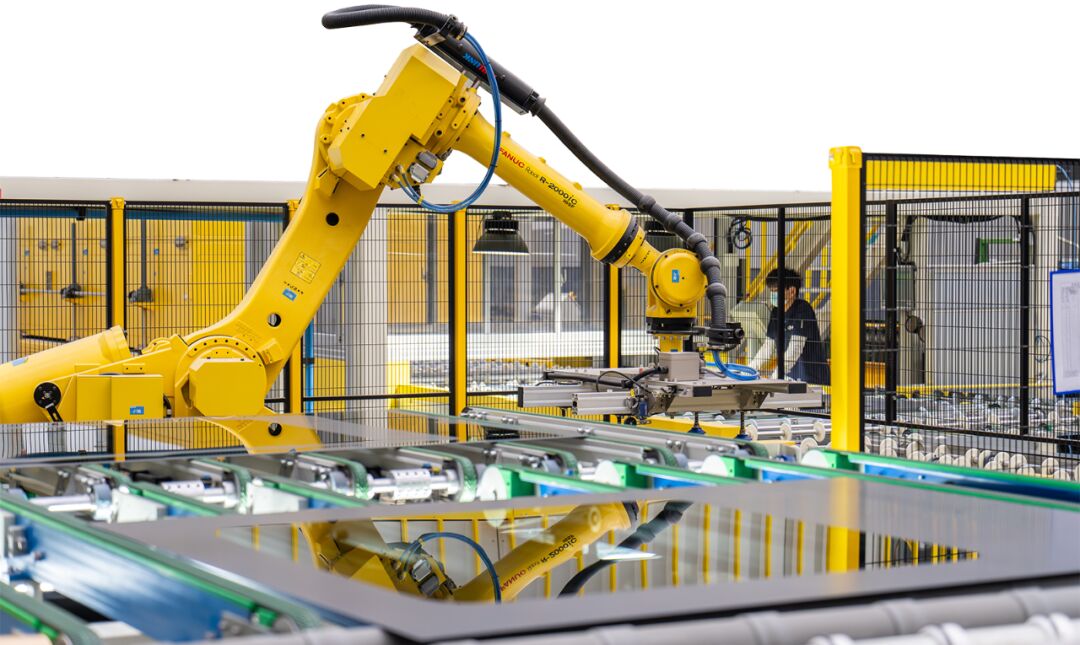
China’s automotive industry presents a striking contrast: in terms of scale, it ranks among the world’s largest, with annual production exceeding 30 million units and a vehicle parc of over 350 million. However, in professional aftermarket segments such as VGRRR (Vehicle Glass Repair, Replacement and ADAS Calibration), China’s market value remains significantly lower than that of mature European and North American markets.
This gap highlights a core challenge in the transition from quantity to quality: scale advantages must be matched by upgraded value creation. In the auto parts sector, long-standing price competition and the prevalence of counterfeit products have suppressed innovation, discouraged quality investment, and trapped the industry in low-level competition, limiting sustainable growth.
Counterfeit automotive glass is a typical example. Legitimate glass markings contain critical information about manufacturers, vehicle brands and compliance standards, serving as reliable proof of authenticity. By regulation, these markings must be permanently etched and tamper‑proof.
Driven by illegal profits, unqualified operators produce low-cost imitations that mislead consumers, passing off inferior products as genuine. Beyond safety risks, counterfeit glass also incurs substantial environmental and resource costs, as its short lifespan leads to frequent replacements and increased waste throughout the lifecycle.
Unfair competition also continuously erodes service value. When low prices and counterfeits dominate the market, legitimate businesses face squeezed profit margins, reduced service investment and limited capacity to deliver premium solutions. Installers and technicians struggle to be fairly compensated for professional skills, weakening the industry’s overall value creation capability.
These challenges
are not unique to a single segment—they reflect common issues across
China’s manufacturing sector in its pursuit of high-quality
development. To achieve a genuine upgrade, industries must move away
from trust‑undermining, value
-
depleting
competition toward collaborative, win
-
win cooperation. A
healthy, sustainable ecosystem—where quality products and
professional services receive fair market returns—will provide the
fundamental driving force for China’s manufacturing transformation.

Standardization as the Foundation
Ecosystem as the Engine
Moving beyond low - level competition requires more than rhetoric; it demands practical, enforceable and widely accepted industry standards. This is why Fuyao has chosen standardization as its core strategy.
Developed by Fuyao, the CARG system (C for China, ARG for Automotive Replacement Glass) is built on 35 years of accumulated market data. It integrates detailed information on each glass part, including applicable models, dimensions and functional specifications, effectively assigning a digital ID to every piece of automotive glass. The system establishes a unified, authoritative coding standard for China’s automotive glass supply chain.
Previously, the industry lacked consistent coding norms. Disjointed naming and management systems led to frequent errors in part identification, selection and logistics. Mistakes resulted in installation failures, rework, dealer returns and additional costs, most of which were ultimately borne by consumers. Industry estimates indicate that losses caused by misidentification exceed 20% of total procurement value.
As China’s automotive industry continues to grow rapidly, a standardized coding system is no longer optional—it is essential for digital transformation and modern supply chain management. CARG provides a professional, transparent and shared language for a large and increasingly complex market.
However, standards alone are not sufficient. Real impact depends on effective implementation across distribution, installation and service networks. This is where Fuyao’s ecosystem strategy plays a critical role.
- Fuyao partners with downstream stakeholders to develop nationwide installation and service standards, covering qualified product selection, standardized processes and certified materials. By establishing benchmark stores, providing systematic training and offering operational support, Fuyao drives consistent service quality nationwide, delivering reliable, cost - effective solutions to consumers and predictable claim costs to insurance partners.
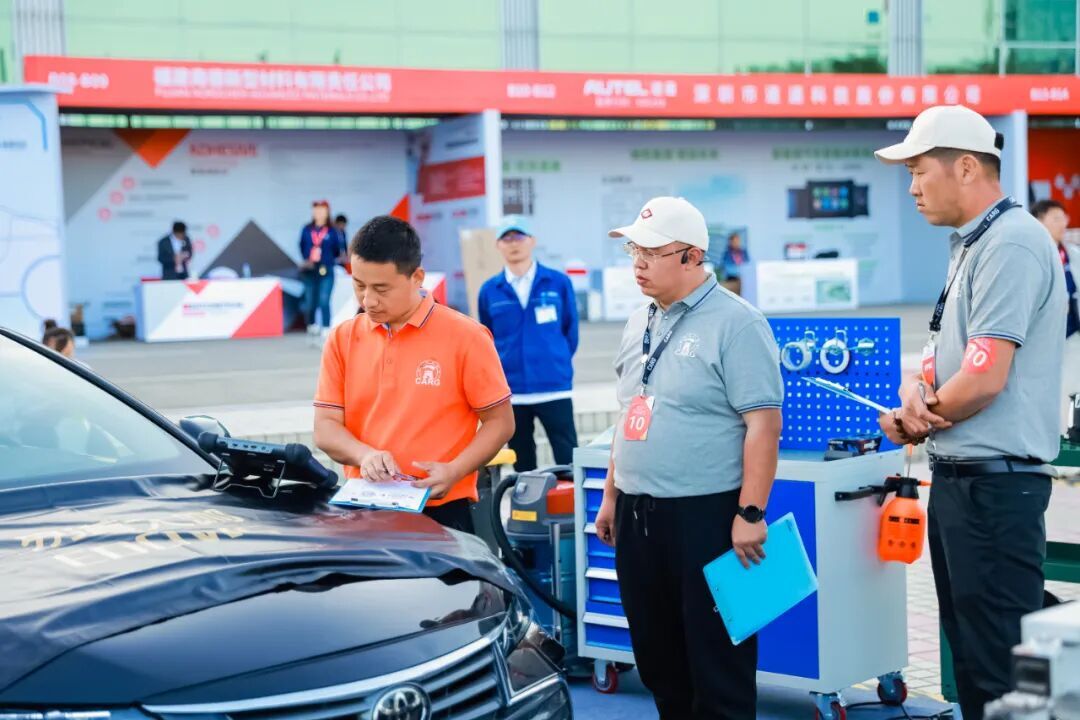
- Fuyao also hosts the National Automotive Glass Skills Competition, transforming written standards into practical benchmarks. Now in its third edition, the competition evaluates not only speed but also operational compliance, technical proficiency and professional ethics, making expertise visible and providing technicians with clear career paths and recognition.
Together, upstream standardization through CARG and downstream ecosystem collaboration form a sustainable foundation for the industry. Underpinning this long‑term commitment is Fuyao’s core principle of long‑termism and integrity: investing in robust standards, efficient supply chains and shared trust rather than engaging in destructive price competition.
Practical results have been encouraging. Fuyao’s one product, one code traceability system enables full lifecycle tracking of every glass part, with clear accountability for manufacturing defects. The CARG system achieves over 95% accuracy in part identification, breaking historical data monopolies and improving market transparency.
Most importantly, standardization is reshaping the value chain. Authorized stores within the CARG ecosystem report higher average order values and profit margins, as consumers are willing to pay a premium for safety and reliability. Teams spend less time verifying parts and resolving disputes, and more time enhancing service quality and operational efficiency. Clear, transparent and traceable standards are translating into tangible business value.
Breaking the “Walled-in” Mindset
Expanding Management Boundaries
While standards and ecosystems drive Fuyao success, they are enabled by a deeper transformation: redefining corporate roles and expanding management boundaries.
Many enterprises have long focused narrowly on price competition, cutting corners and prioritizing short‑term gains over sustainable development. This approach may yield quick results, but it erodes trust and undermines long - term industry health.
Achieving high - quality manufacturing requires broader vision and long - term commitment: winning through superior quality, reliable performance and professional service rather than price alone. When industry participants collaborate to expand the market and enhance overall value, all stakeholders benefit from a healthier, more sustainable ecosystem.
This mindset underpins Fuyao’s management evolution: moving from inward - focused, factory - centric thinking to cross - industry, end - to - end governance. “We must rethink the scope of management—our responsibility does not end at the factory gate,” emphasized Curie Chen. Modern management extends beyond internal efficiency to encompass supply chain performance, customer experience and the overall health of the industrial ecosystem.
This leadership shift sets an important example for the broader industry:
- Industry leaders must lead not only in scale and technology but also in rule‑making, standard‑setting and ecosystem building.
- Small and medium‑sized enterprises gain a clear development path: collaborate with industry leaders and create unique value within the shared ecosystem.
China’s manufacturing has achieved remarkable global stature through scale and speed. To grow stronger and further, it requires more: a trust - based, rule - driven and long - term - oriented collaborative ecosystem.
In an era of evolving competition, this “ cross - boundary, ecosystem - first mindset ” represents the true starting point for China’s manufacturing to realize genuine high - quality development.